The Arkham Catacombs
Every Choice Remembered.
Nothing Taken Back.
A Lovecraftian investigation in 1920s Massachusetts. There are no menus and no scripted choices. You say what you do, in your own words.
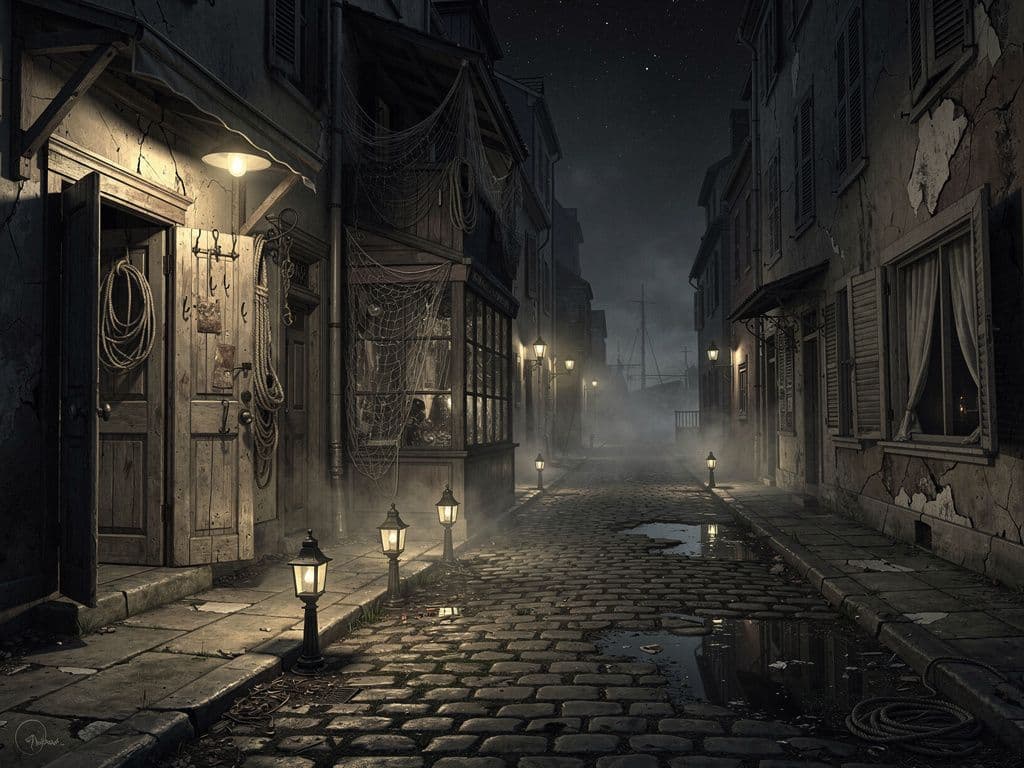
Arkham, October 1925
A cult is trying to summon something from under the town. The ritual has nine stages, and it keeps going whether you act or not.
It ends on the first of November.
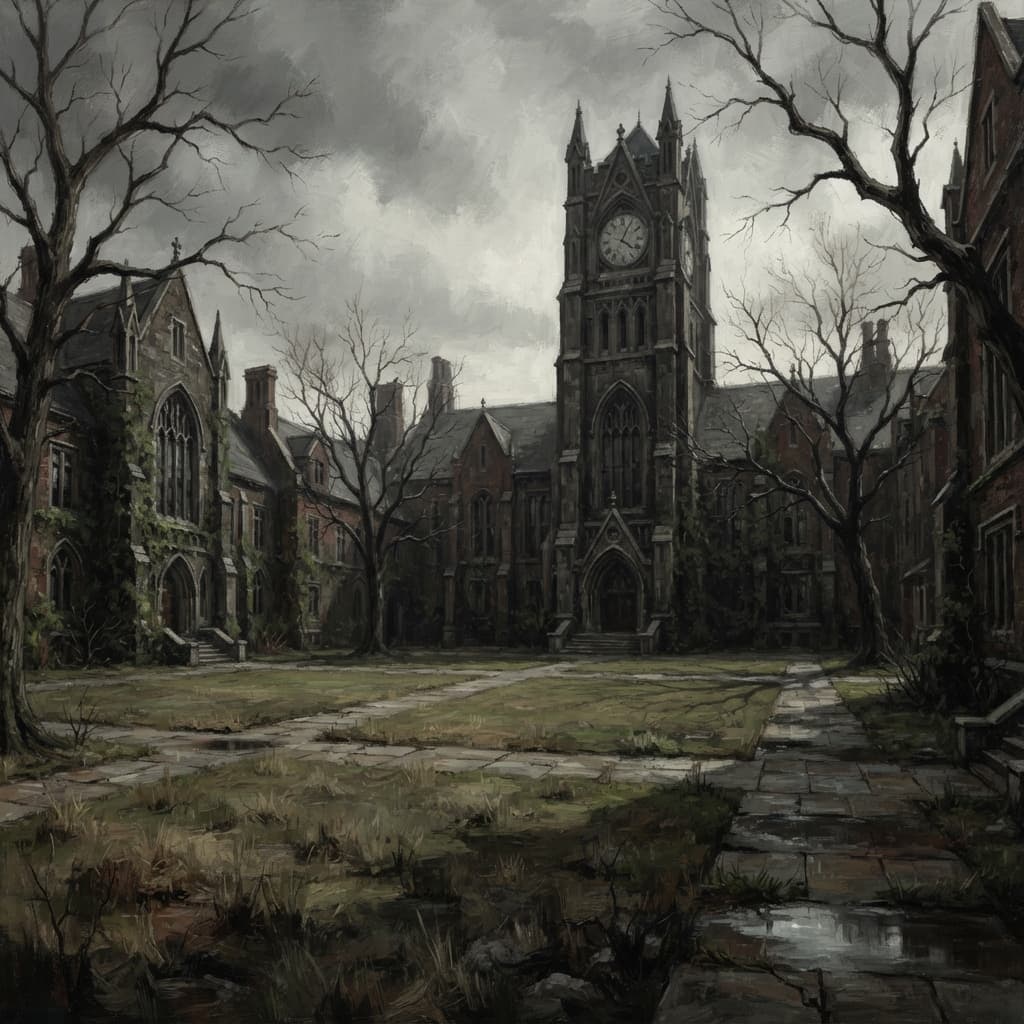
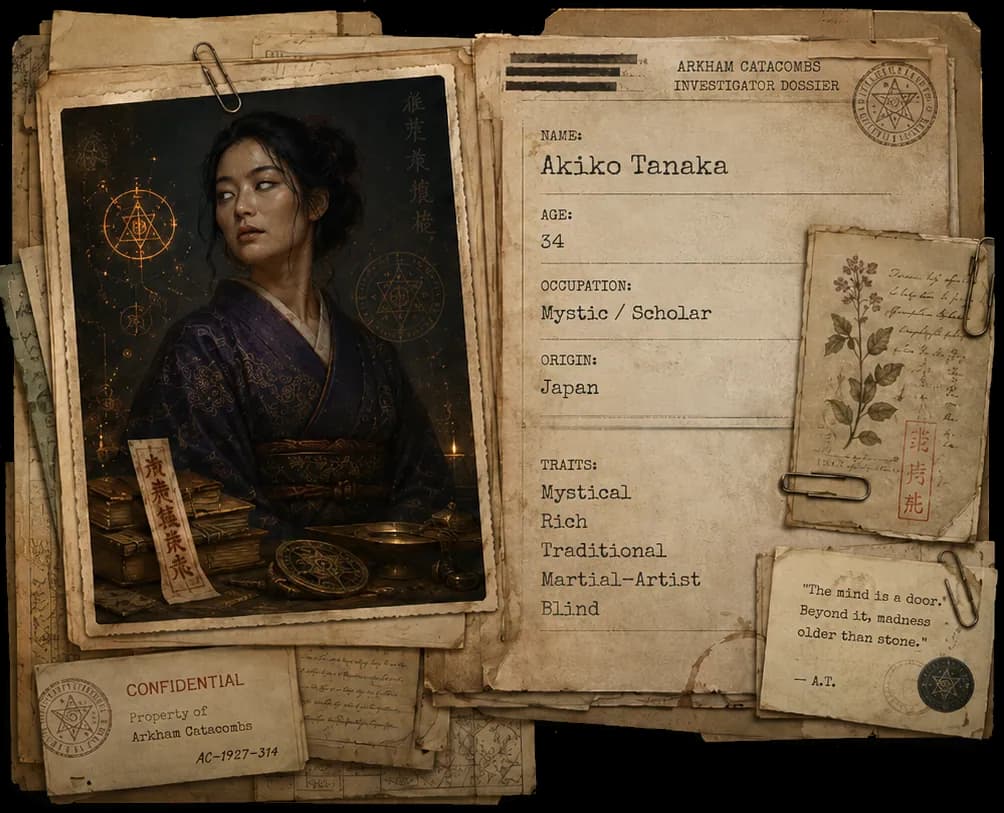
You describe a person
Write a few sentences about who your investigator is. The game builds the rest and hands you back a case file.
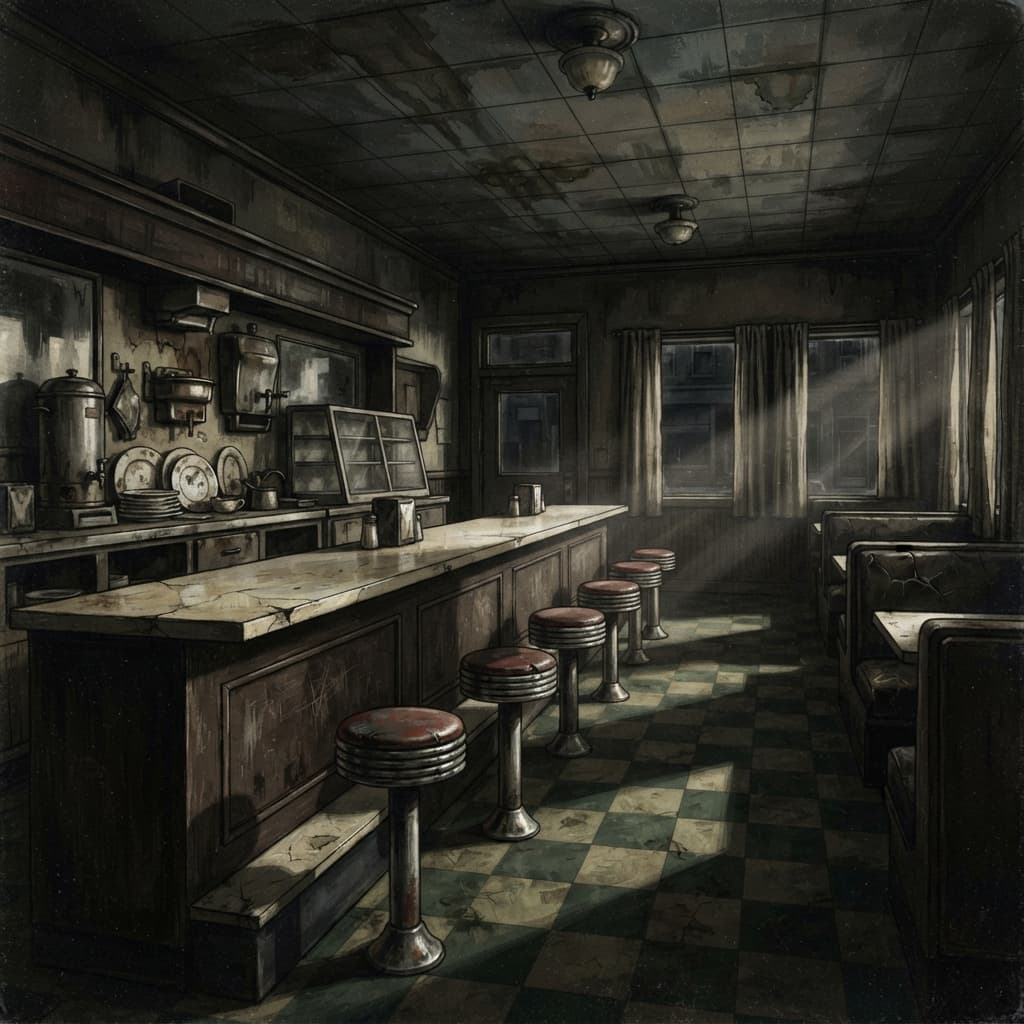
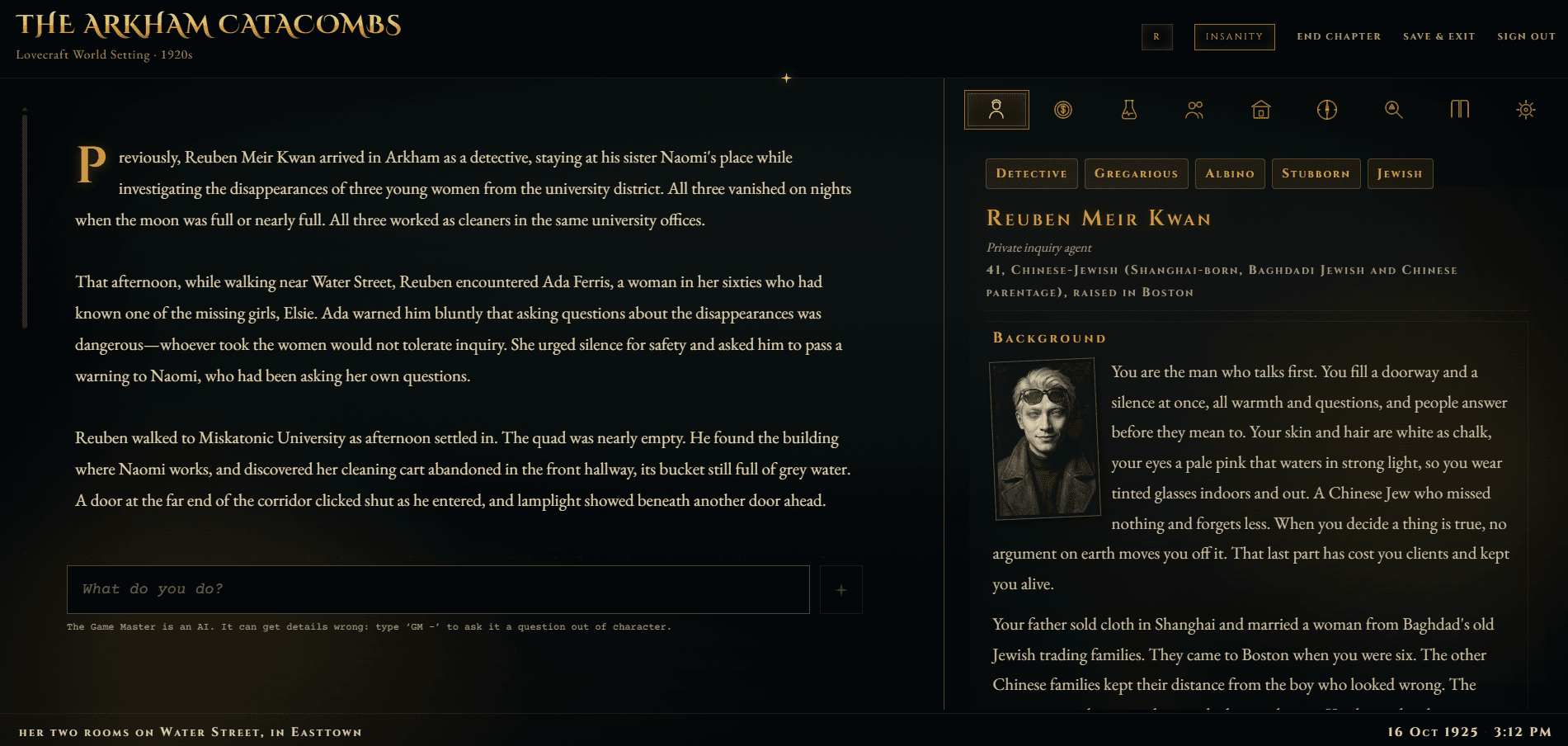
Then you play
You read what is happening, then type what you do next.
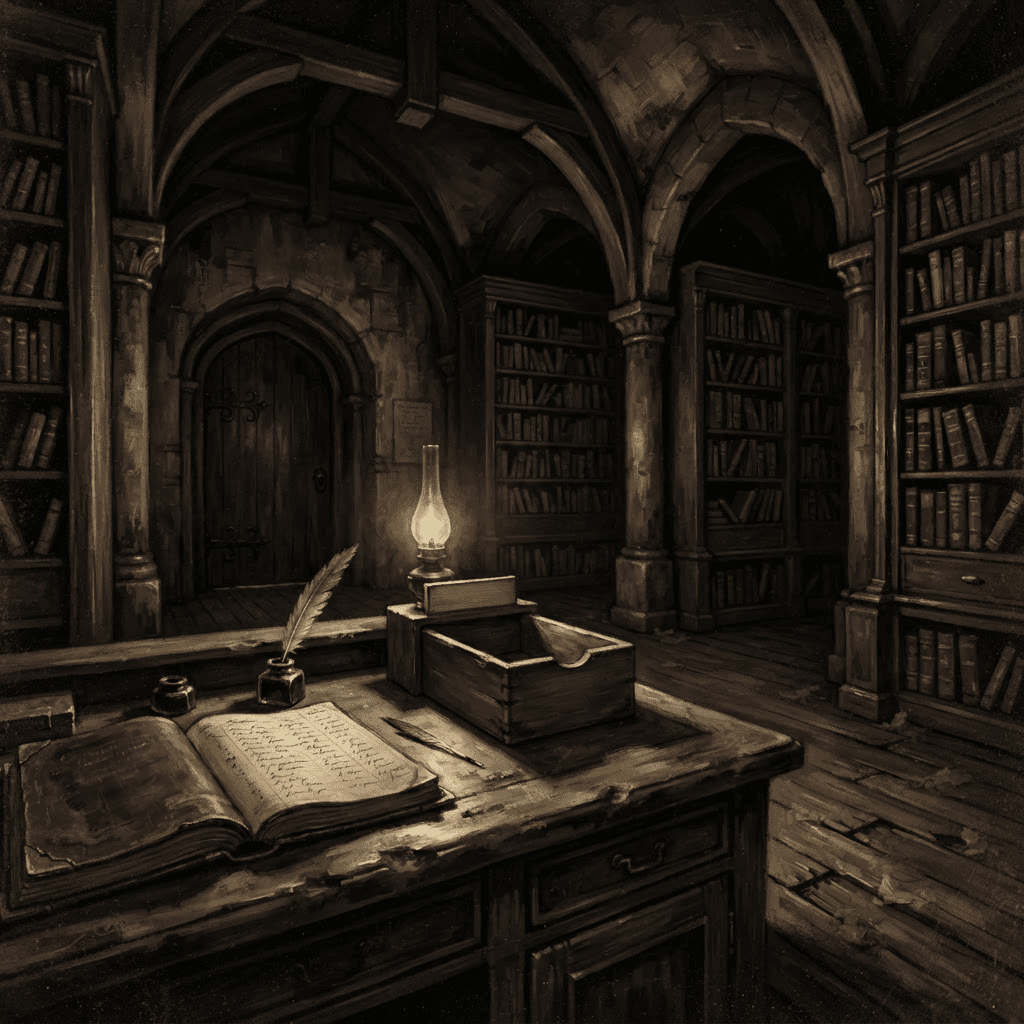
The town remembers what you did
Everyone you meet forms their own opinion of you, and nobody tells you what it is. You just notice a door that used to be open is closed.
Do something at the docks on Tuesday and word spreads by Friday. It reaches some people and not others. It gets less accurate as it travels.
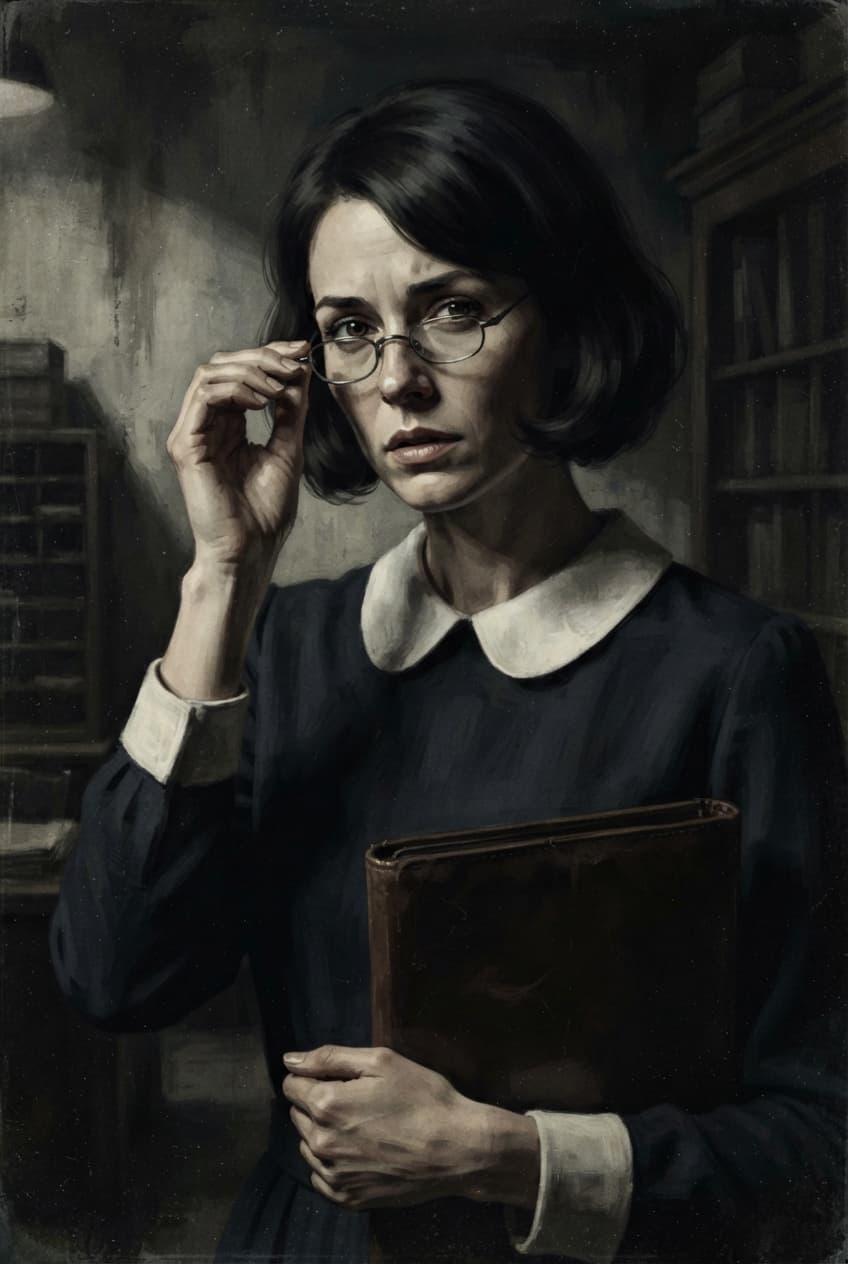
People only know what they have seen
The librarian knows her reading room, and the man who comes in on Wednesdays. She has no idea what is in the church basement across town.
Push her and she has nothing to give you. Not because the game is hiding it, but because she was never there. Ask the man who was there, and he knows a different piece of it. Some of what he tells you is wrong.
You can also lie to him. Tell him something he never knew, say it as though you were there, and he may well come away sure it is true. Nothing warns you that you have done it. From then on it is what he remembers, and what he tells the next person who asks.
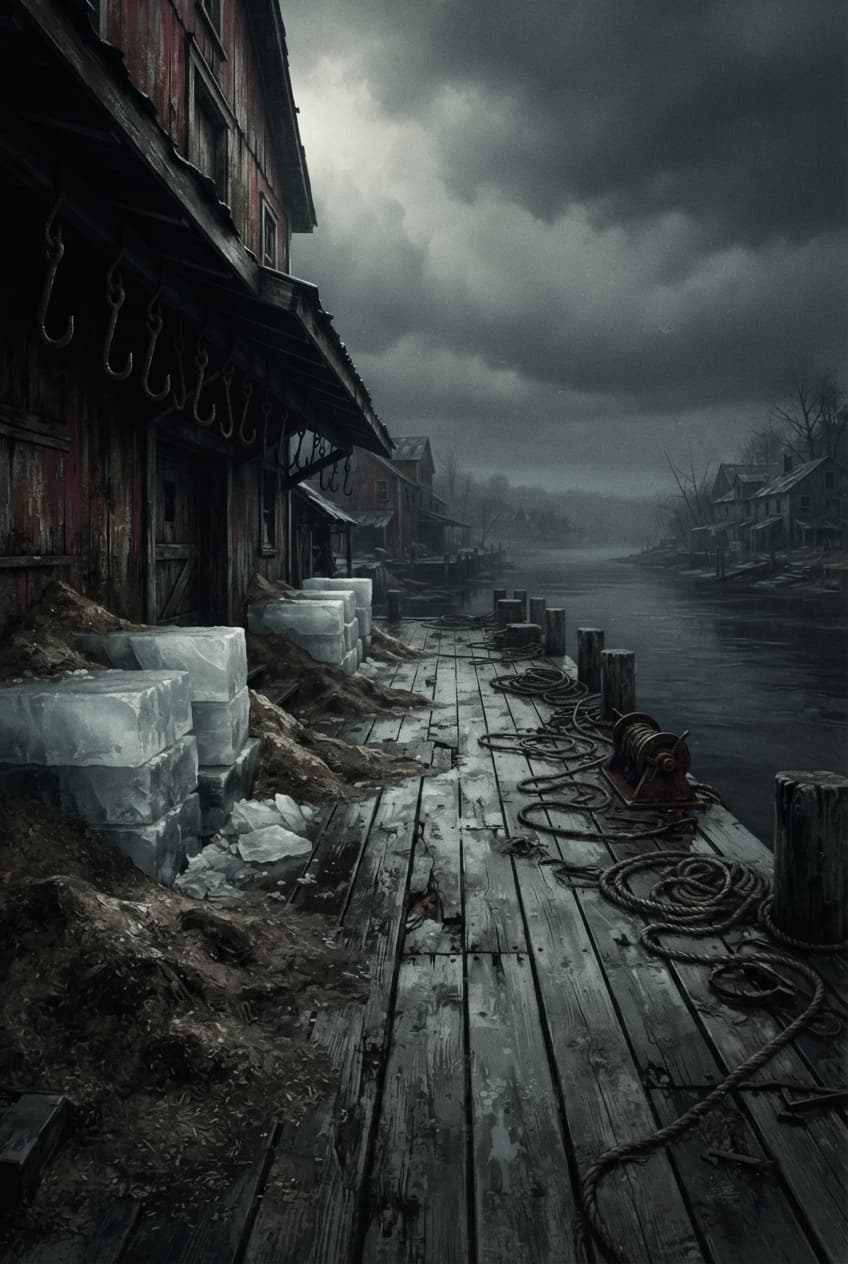
Something is hunting you
It does not follow footprints. It follows the questions you ask.
Every real step forward makes you easier to find. You cannot hide from it.
Chase the cult and you draw it to you. Hide from it and the ritual gets closer. You cannot do both at once, and deciding what to let get worse is most of the game.
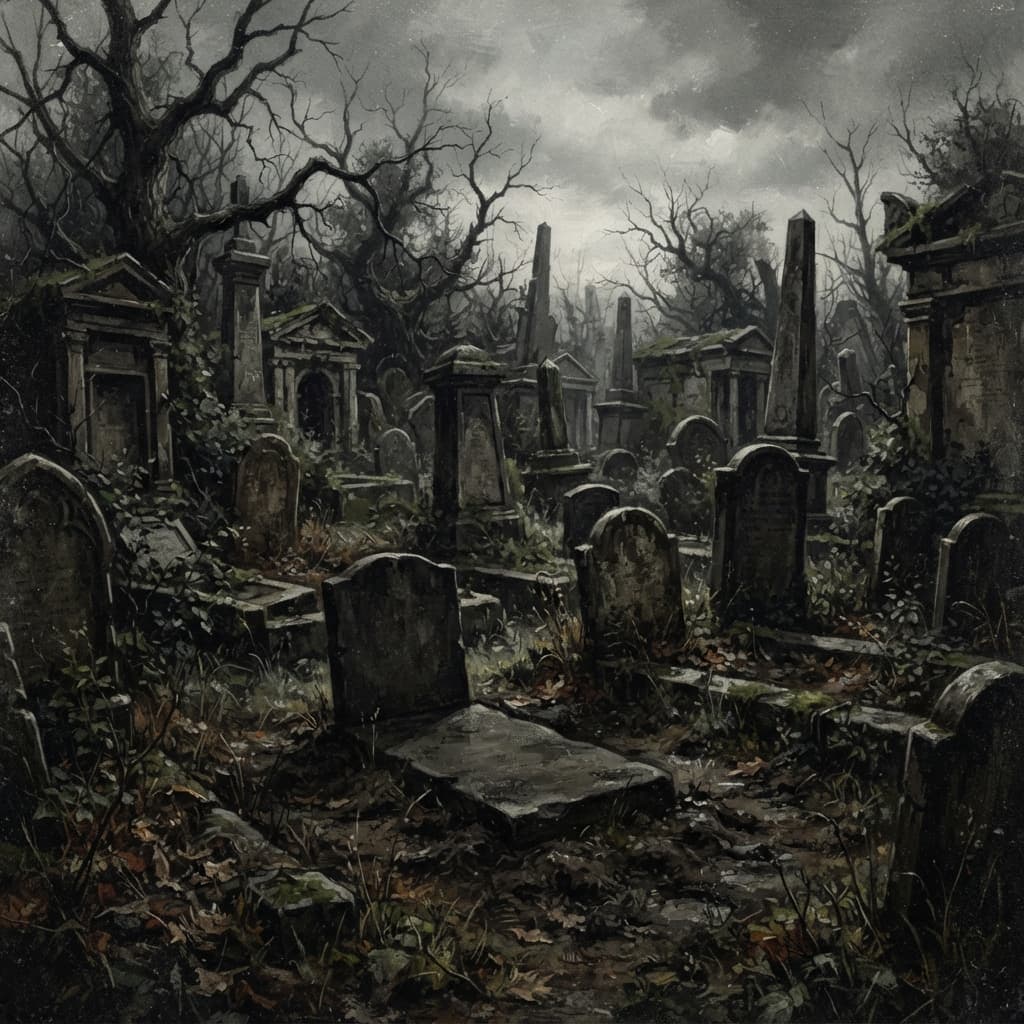
You can lose
Three separate ways, and only one of them is dying.
Your body wears down first. Hands shake, breath comes short, pain crowds out thinking. Losing your mind is quieter than that. The clever idea that would have saved you last week simply never arrives.
The third is the worst. You stay capable. You keep everything you came in with. Your skills simply start working for something that is not you.
None of it gives you a game over screen. You get an ending, written from what you actually did.
Closed beta
We send invitations by hand, a few people at a time. Join the list and we will write to you when the next round goes out.
Request your invitationFree to join.
Questions
Is this just ChatGPT with a Lovecraft skin?
No. ChatGPT begins again every conversation. Here your investigator, everyone you have met and the state of the town are written down and stay written down. Come back next week and what you did last Tuesday is still done.
How is it different from the other AI roleplaying games?
Those proved that people want to play this way. What they did not solve is the world holding together: characters who forget you, a story that agrees with whatever you claim about yourself, consequences that vanish when the scene changes.
Every one of those was something we had to build, not something we had to word carefully.
Can I just tell it I am a master swordsman?
You can say it. It will not become true. What your action costs and what it changes is settled before a word of prose exists, by something that is not the Game Master. The Game Master is told the result and cannot overturn it.
It has no way to flatter you, because it is not the part that decides.
Will it remember what I did three sessions ago?
Yes, and you will not have to remind it. Someone you met in your first session is still there in your twelfth, with whatever passed between you intact.
People can also bring up something you did months ago that you never described in the same words.
Does anything happen while I am not playing?
Yes. Time passes without you. The people you have met get on with their own lives, and the ritual keeps advancing. Come back after three days and the town has moved on without asking.
Does it actually end?
Yes, and it can end badly. There is a date, the first of November, and it does not move.
When your investigation finishes you get an epilogue built from what you did and what you failed to do. Not a score, and not a game over screen.
Do I need to know Lovecraft?
No. The world introduces itself as you go. If you have read the stories you will notice things other people miss, and you will work out what is behind the ritual sooner. Knowing does not make you safer.
Do I need to have played roleplaying games before?
No. There are no classes and no stat blocks to learn. You make your investigator by describing a person in a few sentences of plain English, and the game builds the rest.
What do I actually type?
Plain English. “I search the room.” “I ask her about the photograph.” “I try the side door.” There are no commands to learn.
How long does a session take?
An hour or two, depending how far you go. It runs in a browser with nothing to install, and it saves as you play, so you can stop in the middle and pick it up later.
What is behind the ritual?
You are not told. It is chosen for your investigator, and you work it out from how the world goes wrong rather than from a name on a page: what the weather does, what people start dreaming, what washes up on the shore.